Loading...
Data Structures. Sets
Basic information
This is a short summary of the section about sets in the book Computer Science Guide by William Springer.
A set is an unordered collection of unique items.
There are three main operations, each of which takes two sets as arguments and returns another set as a result.
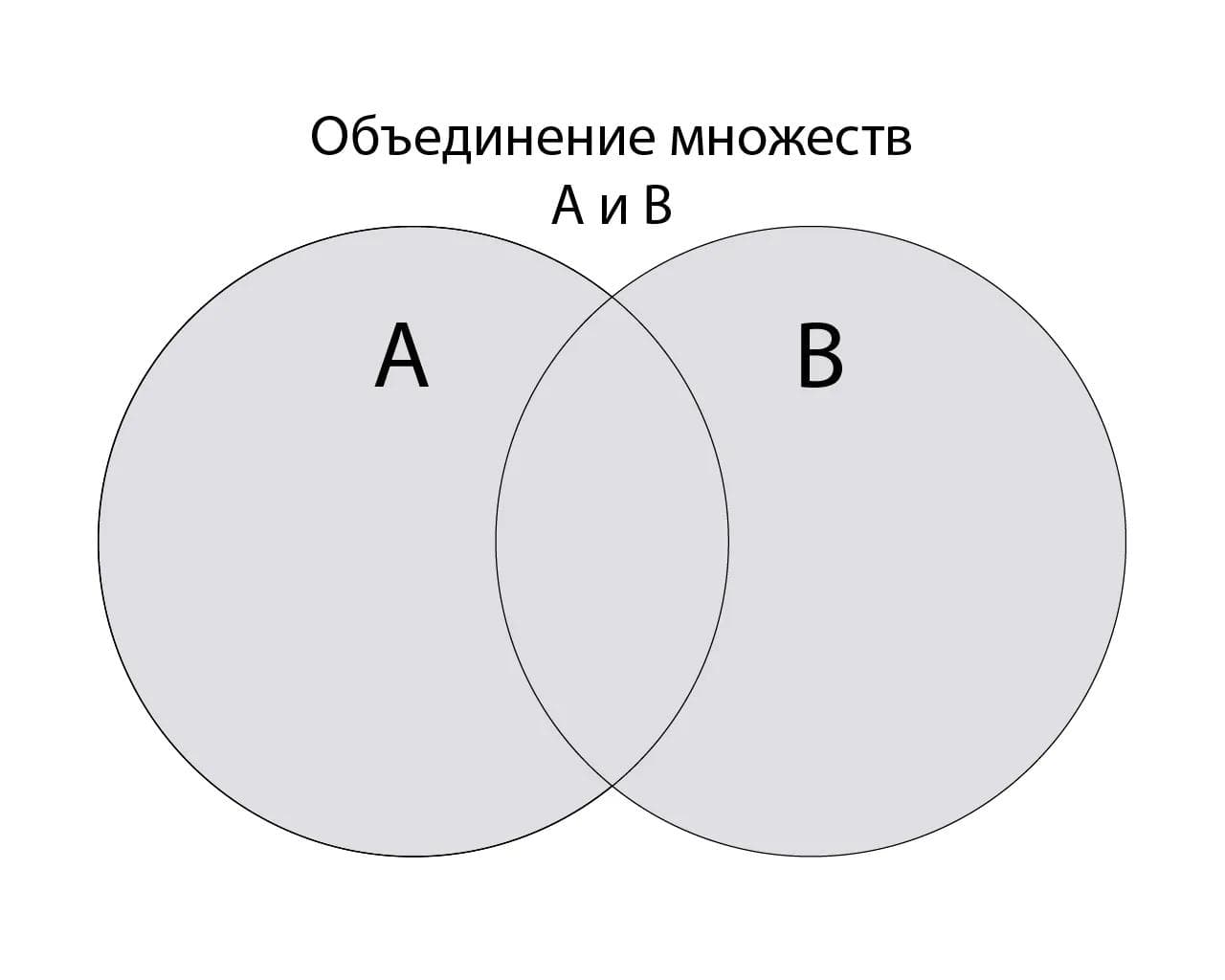
Union(A, B) — the union of sets — is the set containing every element that belongs to at least one of the sets A and B. The union is usually denoted as A ∪ B.
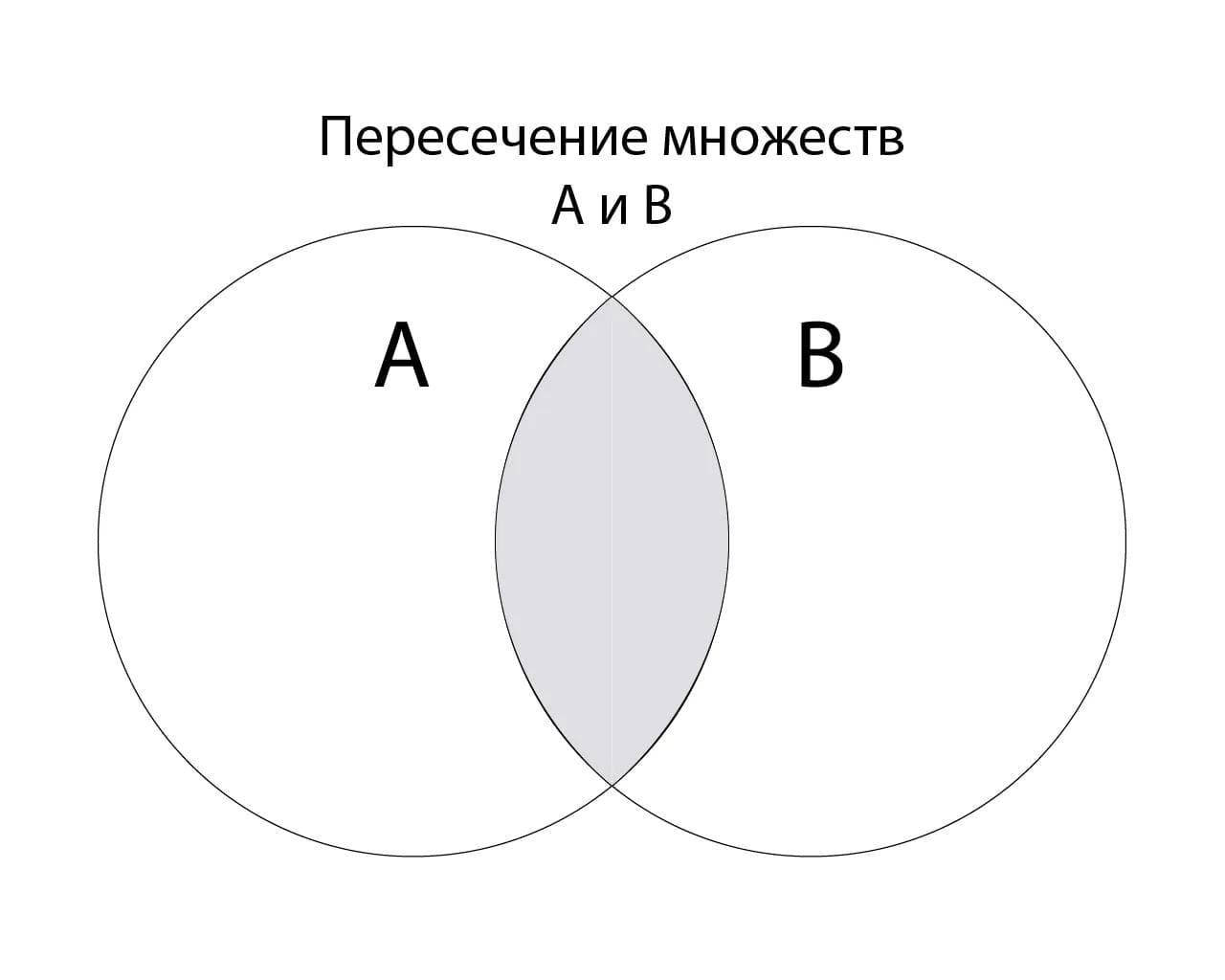
Intersection(A, B) — the intersection of sets — is the set of elements contained in both A and B, denoted as A ∩ B.
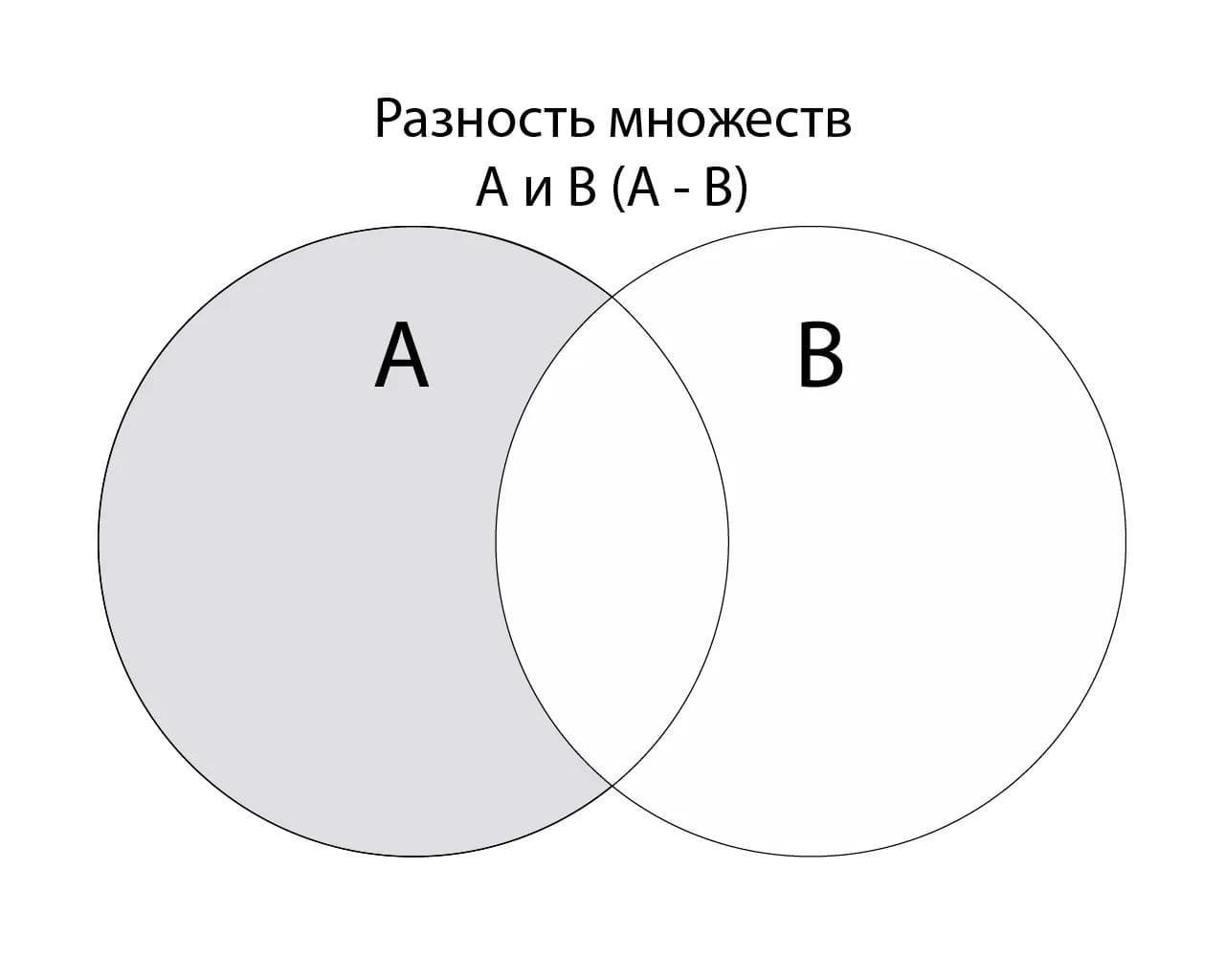
Difference(A, B) — the set difference — denoted as A − B — is the set containing all elements that are in A but not in B.
There is also a Subset(A, B) operation, which returns a boolean value. It returns true if A is a subset of B.
A proper subset means that A is a subset of B and A is not equal to B.
Notation used:
- A ⊆ B — A is a subset of B
- A ⊈ B — A is not a subset of B
- A ⊂ B — A is a proper subset of B
- A ⊄ B — A is not a proper subset of B
If A ⊆ B and B ⊆ A, then A = B.
Example of an integer set: {4, 7, 12, 18, 2004}
In JavaScript, a set is represented by the Set object.
Types of sets
A multiset allows duplicate elements: it stores multiple copies of the same value or keeps a count of how many times a value appears in the set.
A partially ordered set is one in which some elements are ordered relative to each other. For a binary relation (an operation that works with two operands) ≤ between elements b and c, it may be true that b ≤ c, or c ≤ b, or there may be no relation between b and c.
A totally ordered set is one in which all elements are comparable using ≤ — for any two elements f and g, either f ≤ g or g ≤ f.
For such a relation to hold, it must be:
- Reflexive — every element is less than or equal to itself
- Antisymmetric — if b ≤ c, then c cannot be ≤ b unless b = c
- Transitive — if b ≤ c and c ≤ d, then b ≤ d
For example, let ≤ mean the relation “is a descendant of”, where by definition every person is a descendant of themselves. This relation is antisymmetric (if I am your descendant, you cannot be my descendant) and transitive (if I am your descendant and you are a descendant of my grandfather, then I am also a descendant of my grandfather). This is a partial, not total, order because two people may be unrelated in terms of ancestry.
A heap is a partially ordered multiset.